
The World's Most Misunderstood Tax
What's the big deal about Tariffs?

Hi Reader,
Hari here. After years at the intersection of credit, lending, and markets, what I’ve noticed is this: the same handful of concepts keep surfacing — in business decisions, in geopolitical headlines, in conversations about strategy. Most people have heard the terms. Fewer have had someone sit down and actually explain them. Mental Mosaic Explains (ahem, better title suggestions welcome!) is my attempt to do that — one concept at a time, clearly enough to be useful whether you’re watching the news, having a debate with a friend, picking up the Wall Street Journal, or running a business.
The first topic: Tariffs
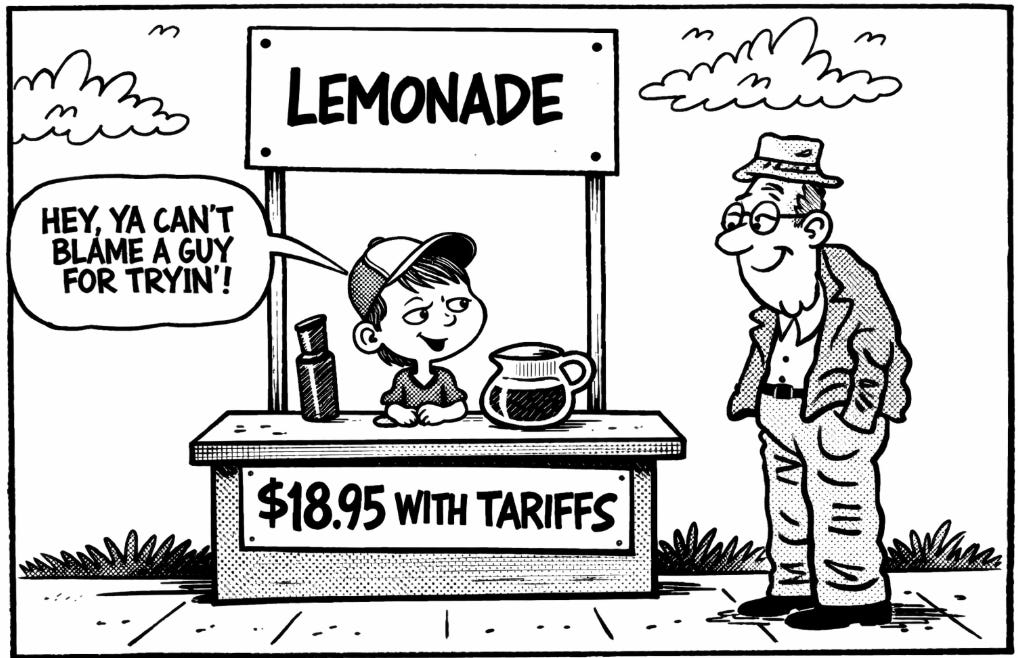
Tariffs have become a political football — but they carry real-world consequences. While the exact figures are often debated, tariffs trickle down to everyone’s pocketbook. Cars, for example, are expected to cost $2,000–$4,000 more due to higher steel prices. Appliances often cost hundreds more.
As a practitioner who finances loans for companies, I see consequences that ripple far beyond the headlines. Companies that import goods suddenly face cost increases they didn’t budget for and can’t always pass on. So they adapt — buying their goods upfront to beat the next round of increases, cutting costs wherever they can, laying off workers, and raising prices when margins leave no other choice. Each decision is rational in isolation.
Together, they signal something more troubling: a business under pressure, making short-term moves that quietly erode the foundation a lender underwrote (rant over).
It’s been on people’s minds, and, perhaps because the topic has been politicized over the last decade, it isn’t surprising that I am frequently asked to explain what tariffs are.
Back to Basics — What are tariffs, anyway?
A tariff is a tax, duty, or levy on an imported good. Primarily used as a protectionist measure, tariffs work by making foreign products more expensive, nudging consumers toward domestic alternatives.
Who imposes them? The government. More specifically, here in the U.S., Congress has the right to collect taxes (as affirmed by a Supreme Court ruling in February). But throughout the 20th and 21st centuries, it has largely delegated that power to the Executive branch.
Who pays for them? The importer of that particular good is under the tariff. Goods arrive at a port of entry, and the buyer pays customs duties and tariffs, usually before the goods are cleared to leave the port.
But who REALLY pays?
It’s the rest of us: Because a tariff is an added expense on an importer, who hopes to sell these goods domestically or use them as a production input in their own operations, they would likely defend their margins by passing those costs on to the consumer.
And we’re at the mercy of the importers: If there’s a 10% tariff on a $100 imported good, assuming a 100% pass-through rate, that product effectively costs $110 after the tax. Now, in reality, the importer often tries to find ways to cut costs: push back on the producer, take a slightly lower profit, or find other efficiencies where possible. Very rarely do a 100% of the tariff pass through to the consumer.
And it doesn’t just hurt buyers; it hurts market efficiency: Those who would have purchased at the lower price don’t, and, assuming a foreign country isn’t dumping goods into the local economy, resources flow toward less efficient producers. In short, tariffs transfer money from consumers to producers and the government — and create waste in the process.
FYI — who doesn’t pay for them? Foreign governments. But they do hurt as well. Exporters from countries whose goods are subject to tariffs might end up losing buyers in the country imposing them. All in all, not good for free trade.
So, why do countries impose them?
#1- Level the playing field: When foreign goods are priced artificially low, domestic companies can’t compete. Tariffs close the gap and protect jobs.
Ex: The U.S. has repeatedly imposed tariffs on imported steel sold below cost, protecting domestic steelmakers from being undercut by cheaper foreign production.
#2- Keep harmful goods out: Some imports are unsafe or low quality. Tariffs make them less accessible, nudging consumers toward better options.
Ex: The U.S. imposed steep tariffs on imported tires in 2009 after foreign manufacturers were found to be flooding the market with cheaper, lower-quality alternatives.
#3- Control critical supply chains: Chips, energy, defense materials. If another country makes it, they can cut you off. Tariffs incentivize making it yourself.
Ex: The U.S. has pushed heavy tariffs on foreign semiconductors and backed domestic chip manufacturing through the CHIPS Act — reducing dependence on overseas production for technology critical to defense and industry.
#4- Retaliation: You tax us, we tax you.
Ex: During the 2018 trade war, retaliatory tariffs by China of U.S. soy imports hurt American farmers.
In Conclusion:
Tariffs are not inherently bad. They have their place. In the 1990s and 2000s, as manufacturing jobs migrated to lower-wage countries, tariffs were seen by many as a legitimate tool to protect domestic workers. During COVID, the vulnerability became visceral — basic drugs, medical supplies, and critical goods were being produced overseas because it was simply too expensive to make them at home. A well-placed tariff might have changed that calculus.
FUN FACTS for your next Bar Trivia:
Tariffs have been in use for around 6,000 years: The imposition of tariffs goes back to ancient Mesopotamia, through to ancient Egypt, Greece, and into our modern times, where it was imposed for pretty much the exact same reasons noted above.
Tariffs were the government’s main source of revenue pre-1913: Before the enactment of the Sixteenth Amendment in 1913, which allowed for the income tax, tariffs were the primary source of U.S. government revenue.
The word “tariff” comes from Arabic: The word tariff comes from the Arabic word ta’rif, which pretty much means the same thing. The Arabic word comes from the root ‘Arafa, which means to make known.