
When To Be Unpopular
🛠️ A Sharp Model: The unpopular decision and the price of making it.

Mental Mosaic transforms ideas into tools for high-agency leaders.
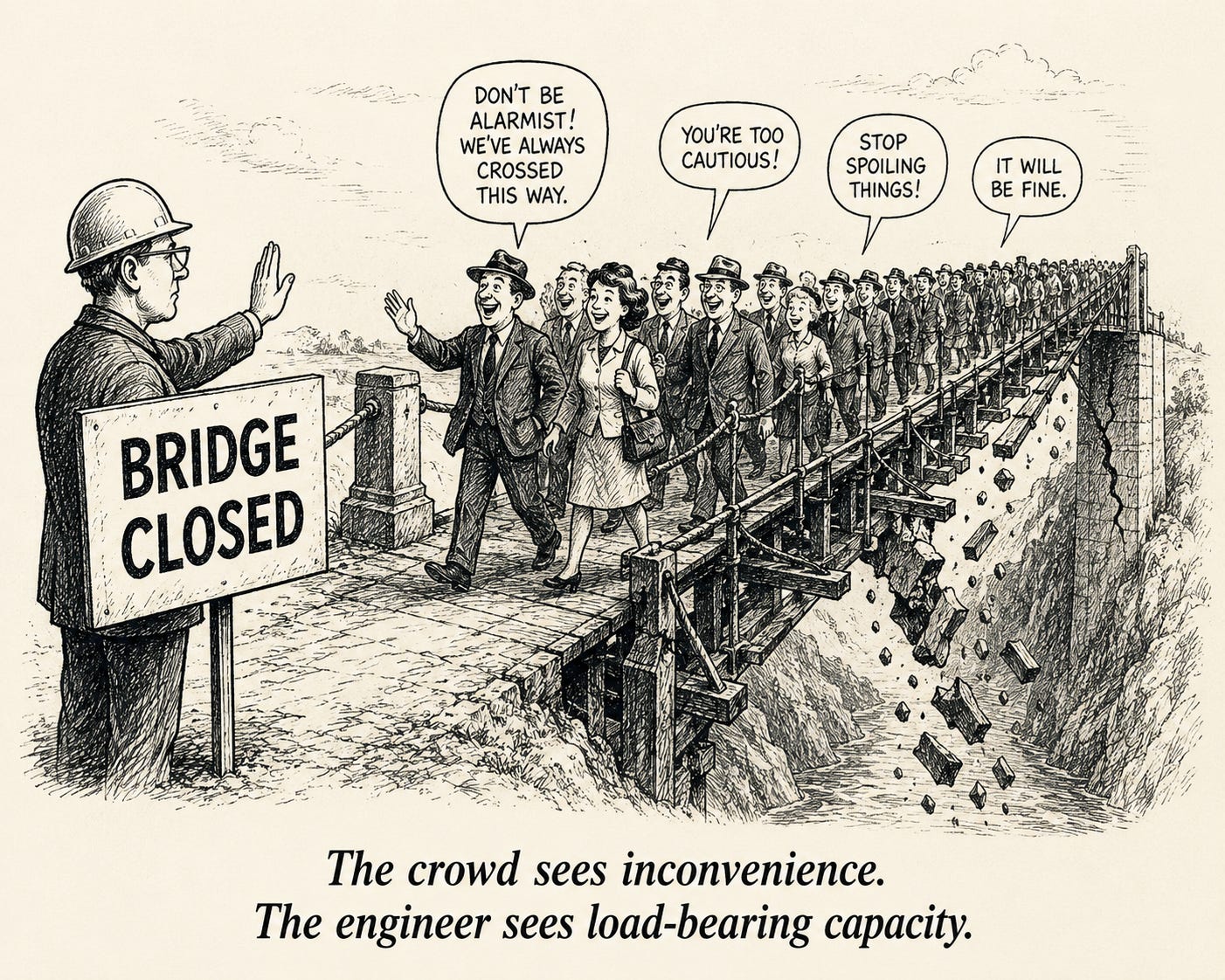
By 1980, the dollar’s value was dissolving. A bill saved at the start of the decade had lost more than half its purchasing power (Sound familiar today?). Grocers re-stickered shelves so often that the markup gun was the busiest tool in the store. Saving was a way to get poorer. Borrowing and spending quickly was the rational move, which only fed the fire.
The country printed buttons that said “Whip Inflation Now,” asked people to carpool their way to stability, and watched prices climb anyway. Economists had to invent a word for it, stagflation, because the textbooks insisted you couldn’t have soaring inflation and soaring unemployment at the same time. The 1970s didn’t read the textbook.
Then came Paul Volcker.
When Jimmy Carter appointed him to lead the Federal Reserve in 1979, Volcker was a six-foot-seven, cigar-chewing economist who looked past the symptom. Most people saw high prices. He saw something deeper: a country that expected prices to keep rising and behaved accordingly.
Volcker’s lesson wasn’t that leaders must be tough. It’s that unpopular decisions become necessary when three things are true:
You can name the disease.
You can price the pain.
Waiting costs something you can’t get back.
He believed inflation had become a habit of mind, and the only way to break a habit was to make it hurt.
So he did the thing every politician dreads. He tightened monetary policy and drove interest rates toward 20 percent, knowing it would push the economy into recession.
It did.
Unemployment climbed above 10 percent. Homebuilders mailed him pieces of unsold lumber. Farmers blockaded Federal Reserve buildings with tractors. Car dealers shipped him the keys to vehicles nobody could afford to finance. (We’re not there yet, but sound familiar today?)
Everyone wanted him to blink.
He didn’t.
Volcker understood that a central bank’s most valuable asset is credibility, and credibility cannot be cheaply repurchased once it’s gone. He chose a deep wound now over a slow bleed forever. The recession was brutal. The recovery proved him right.
His example suggests a simple test for unpopular decisions.
The Unpopular Decision Test
Before making a difficult call, answer four questions.
1. What’s the real problem?
Don’t treat the symptom.
Volcker didn’t see inflation. He saw inflation expectations.
Ask:
Can I describe the actual problem in a single sentence?
If not, you’re probably solving the wrong thing.
2. What’s the cost?
Every decision worth making hurts someone.
Volcker knew his decision would cost jobs, businesses, and political goodwill. He refused to pretend otherwise.
Ask:
Can I say the pain out loud and still choose this?
The leaders who get into trouble are the ones who make the hard call while insisting it won’t hurt.
3. What does waiting cost?
The easy path is rarely free.
It usually borrows against something valuable:
Trust
Culture
Product quality
Capital
Credibility
For Volcker, it was the Fed’s credibility.
Ask:
What irreplaceable asset am I wasting by delaying?
When the comfortable choice is funded by tomorrow’s foundation, the unpopular decision stops looking optional.
4. How urgent, and how sure?
The first three questions tell you whether the decision is right.
This one tells you what to do next.
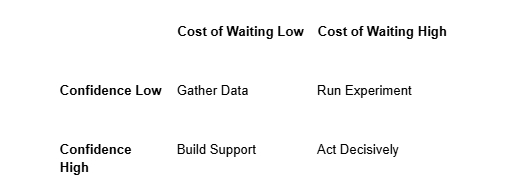
Conviction without urgency means building support.
Urgency without conviction means test quickly.
When both are high, you’re usually not looking for information. You’re looking for permission.
The Same Test, a Smaller Desk
I learned a smaller version of this lesson the hard way. I founded three startups. All three eventually failed.
Long before they did, I spent most of my energy pulling one brutal lever: people’s hours.
When the cash runway tightened, I cut hours. When revenue improved, I added them back. Sometimes I cut them again weeks later.
Every adjustment was a cell in a spreadsheet to me and a grocery bill to someone else.
Nobody thanks you for that, and nobody should.
But the alternative was worse. I wasn’t protecting a spreadsheet. I was protecting the company’s ability to make payroll at all.
The only way I could make those decisions without freezing was to plan them before I needed them. I mapped the actions I’d take at sixty days of runway, thirty days, and fifteen days. I priced the pain in advance so that when the moment arrived, I was executing a plan instead of inventing one. When you contingency plan, the arrival of a problem doesn’t blindside you.
The same logic applies outside business.
Sleeping when you’d rather stay out.
Skipping the second drink.
Eating like someone who plans to be healthy in thirty years.
Each is an unpopular vote. The crowd you’re overruling is simply yourself.
The disease is the same: today’s comfort borrowing against tomorrow’s foundation.
The Rule
When you can name the disease, price the pain, and see that waiting costs something you can’t get back, the unpopular decision stops being a choice.
It becomes an obligation.
The crowd’s disagreement is not evidence you’re wrong. Sometimes it’s the price of being right early.
Stability is never something you have. It’s something you defend, usually before anyone agrees it needs defending.
What’s an unpopular decision you have made? Did it work out? Leave a comment.